




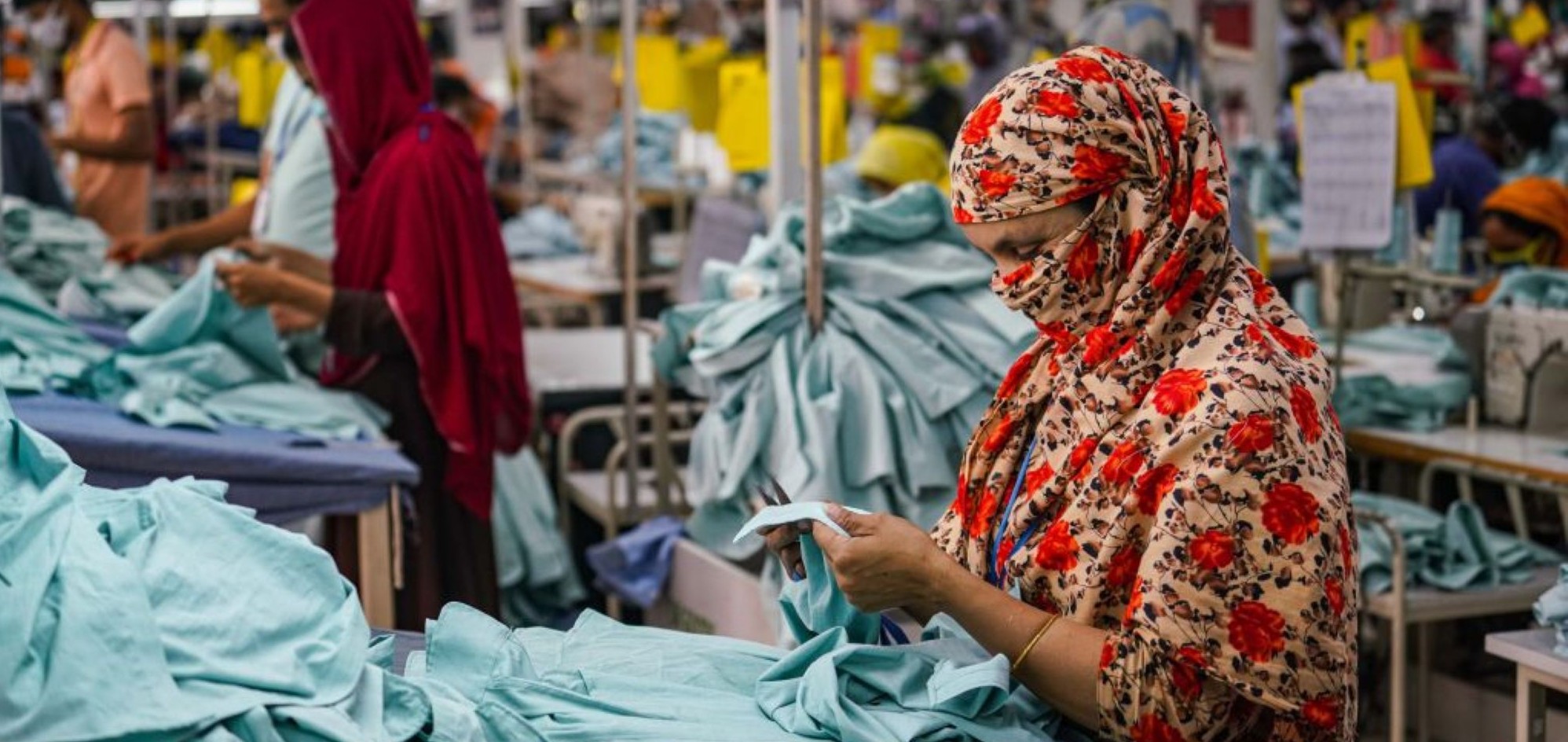
Most factory workers who produce garments for the fashion industry are women. Studies show that women constitute 60-80% of the global garment workforce. This means that when we talk about protecting human rights in the garment and fashion industry, we must also specifically consider the rights of women. Many of the issues facing garment workers, like low wages and precarious employment, disproportionately affect women.
Gender discrimination is rife in the garment industry. Women face a persistent wage gap, earning less than men for comparable work. They also endure rampant gender-based violence and harassment in the workplace.
Empowering women workers is crucial for combating gender discrimination. When states and companies suppress labour rights, such as the right to form unions, they not only undermine workers’ rights but also specifically impede women’s ability to advocate for change.
The garment industry lacks sufficient safeguards for workers, especially women workers. Empowering women workers with greater authority and decision-making opportunities to ensure that new safeguards are designed and implemented based on the genuine, lived experiences of those they aim to protect.
Who are the workers that make garments for the fashion industry?
The garment industry provides jobs to around 94 million workers globally. Due to high levels of informal employment across the industry, it is hard to determine the precise number and gender makeup. However, the International Labour Organization estimates that between 60-80% of global garment industry workers are women.
Asia is the largest employer of garment sector workers, accounting for 75% of all workers. Historically, China has long held the top spot for garment production and while it is still the number one producer, recent years have seen rapid industry growth across countries in South Asia.
Most garment workers in Bangladesh, India, Pakistan and Sri Lanka are internal migrants, predominantly young women. Many of these women moved from rural areas to the city to find employment. Without their families and support networks, they are even more vulnerable to abuse and exploitation.
Workers with multiple, intersecting identities based on their gender, race, caste, migration status or religion face compounding discrimination.
Why do women make up most of the workforce in the garment industry?
In many South Asian countries, garment work is seen as an opportunity for women to enter the workforce. Women and girls form the cornerstone of the garment workforce and yet they bear the brunt of its unequal pay and poor working conditions.
Low minimum wages attract business from rich, powerful fashion brands and distributors who bring in foreign investment. Governments in many developing economies view the garment industry as a pathway to industrialization and growth. However, this economic growth, which disproportionately benefits the richest and most privileged, is often built on the exploitation of poorly paid workers who cannot access some of their most fundamental human rights.
Those who applaud the garment industry for its role in economic growth cannot ignore how those at the helm of the garment industry, from factory managers to multinational fashion brands, fail to meet their responsibilities to workers, especially women workers.
What is it like to be a garment worker?
Human rights abuses are systemic in the garment industry.
Workers often endure poverty wages, dangerous working conditions, and precarious employment contracts. Without a living wage they cannot access essentials like food, healthcare, clean water, education, safe housing and other economic, social, and cultural rights.
Attempts by workers to self-organize or advocate for better conditions are often stamped out by employers and even the state. This suppression of freedoms of expression and the right to unionize creates a climate of fear and intimidation, hindering workers’ ability to demand justice, accountability and remediation.
What does gender discrimination look like in the garment industry?
Human rights and labour rights campaigners have highlighted an urgent need to address widespread gender discrimination in the garment industry. Women are paid far less than male workers and lack access to childcare, maternity pay and other benefits.
Additionally, women workers face a heightened risk of gender-based violence and harassment at work. This is exacerbated by a working culture that often favours men in management positions, despite women constituting most of the workforce.
Research in India and Bangladesh warns that male managers and supervisors often bully, harass and sexualize the women who work for them. Women from marginalized communities, such as Dalit women in India or Tamil women in Sri Lanka and Christians in Pakistan, are particularly vulnerable to such abuse.
Harassment and violence are carried out with impunity, which in turn fuels the cycle of abuses against women workers and other marginalized people.
“There is legislation on anti-discrimination, but the problem is that there’s impunity for the perpetrators and no implementation of that legislation. Access to justice is minimal generally for women and this is doubly so with Dalit women. If women report abuse – if they go to a police station for example, then the chances are the police will also abuse them sexually in one way or another. So, cases are very, very rarely reported.”
Meena Varma from the International Dalit Solidarity Network
What needs to change to improve women’s rights in the garment industry?
A rights-based approach to reforming the garment industry must be driven by the voices of women workers themselves.
Enabling garment workers’ right to organize and unionize is essential. Unions provide a platform for women workers to collectively address concerns about rights abuses, negotiate with employers and advocate for improved working conditions.
Both governments and companies are responsible for implementing measures that counter gender discrimination and gender-based violence in the workplace and ensure equitable working conditions for all garment workers, including the right to freedom of association. To hold them accountable to those obligations, we need to achieve greater awareness of the human rights abuses against women in garment factories, including impartial reviews of working conditions. By unveiling the truth, we can call out factory owners, employers and states to own up to their human rights and take concrete steps to promote the rights of women garment workers.
Learn More
Today Amnesty released two reports documenting widespread anti-union abuse in the garment industry, manifesting in abuses of workers’ rights, harassment and violence by employers:
Stitched Up: Denial of Freedom of Association for Garment Workers in Bangladesh, India, Pakistan and Sri Lanka
Abandoned by Fashion: The urgent need for fashion brands to champion worker rights