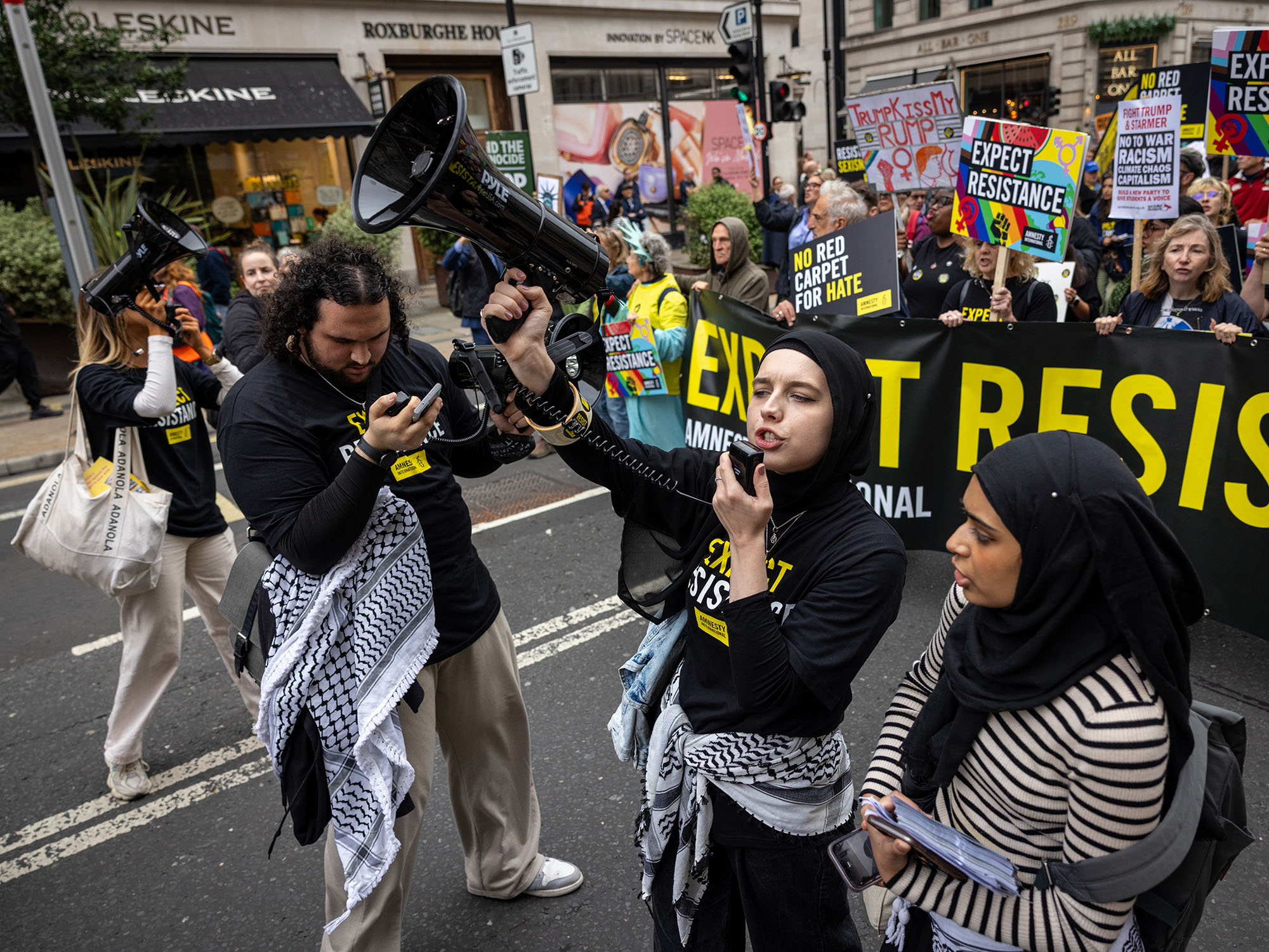
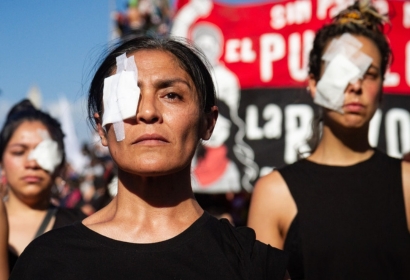

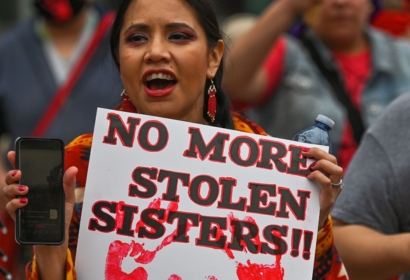

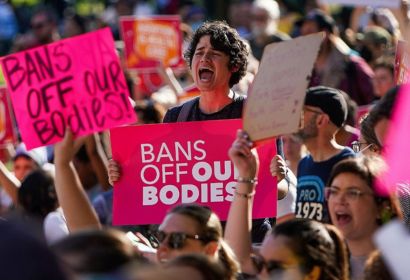






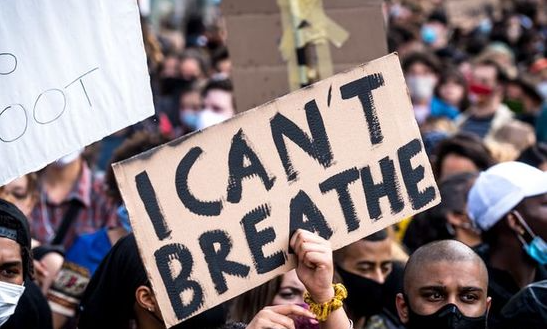
As protests in the wake of George Floyd’s killing spur a ripple effect of change around the country, and around the world, Amnesty International is calling for a ban on the use of facial recognition technology by police for mass surveillance purposes, to address racially discriminatory policing and racial profiling of Black people.
“Black people throughout our communities already experience disproportionate abuses of privacy and basic rights, and surveillance only exacerbates the potential for abuses”, said Michael Kleinman, the director of Amnesty International USA’s Silicon Valley Initiative. “We are seeing these violations play out daily as police departments across the United States use facial recognition technology to identify protestors.
“Just the mere threat of surveillance creates a chilling effect on people that would otherwise exercise their right to protest. Instead of violating human rights daily out on the streets, law enforcement officers should be supporting people’s right to protest these killings and join communities in necessary dialogue.
“The ability to be part of an anonymous crowd is what allows many people to participate in peaceful protests and to feel safe. Instead of using these technologies to heighten people’s fears, law enforcement should fulfill their obligations to respect and facilitate the right of people to peacefully protest.”
Research has consistently found that facial recognition technology systems process some faces more accurately than others, depending on key characteristics including skin color, ethnicity and gender, creating inequities in both surveilling and policing. Just as concerning, facial recognition technology has seen a huge uptake in recent years – particularly in the realm of law enforcement.
Amnesty International is calling for a total ban on the use, development, production, and sale, of facial recognition technology for mass surveillance purposes by the police and other government agencies in the United States, and also calling for a ban on exports of the technology systems to other countries.
Read Amnesty International’s full statement calling for a ban on the use of facial recognition technology for mass surveillance.
Amnesty International is mobilizing its millions of members and activists worldwide to demand the U.S. government respect, protect and fulfill the human rights of Black people. Read more about Amnesty International’s work on deadly force and police accountability.
Read Amnesty International’s guide for law enforcement officials policing demonstrations.
Read Amnesty International’s tips on how to protest safely.
Read more about Amnesty International’s work on technology.