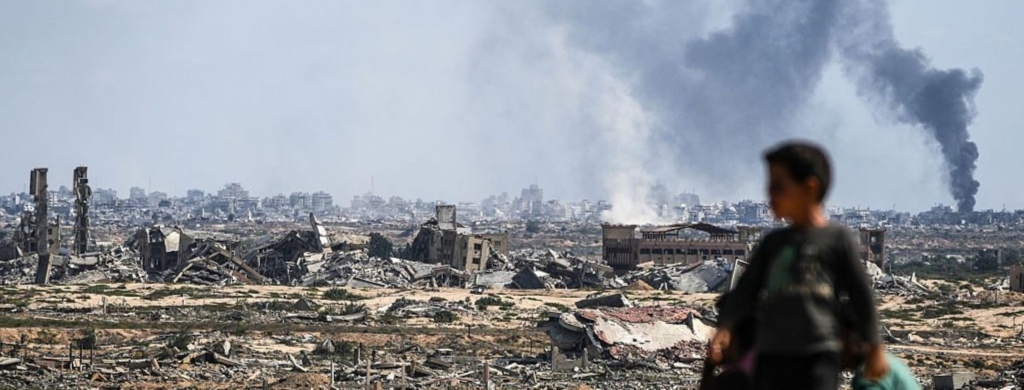






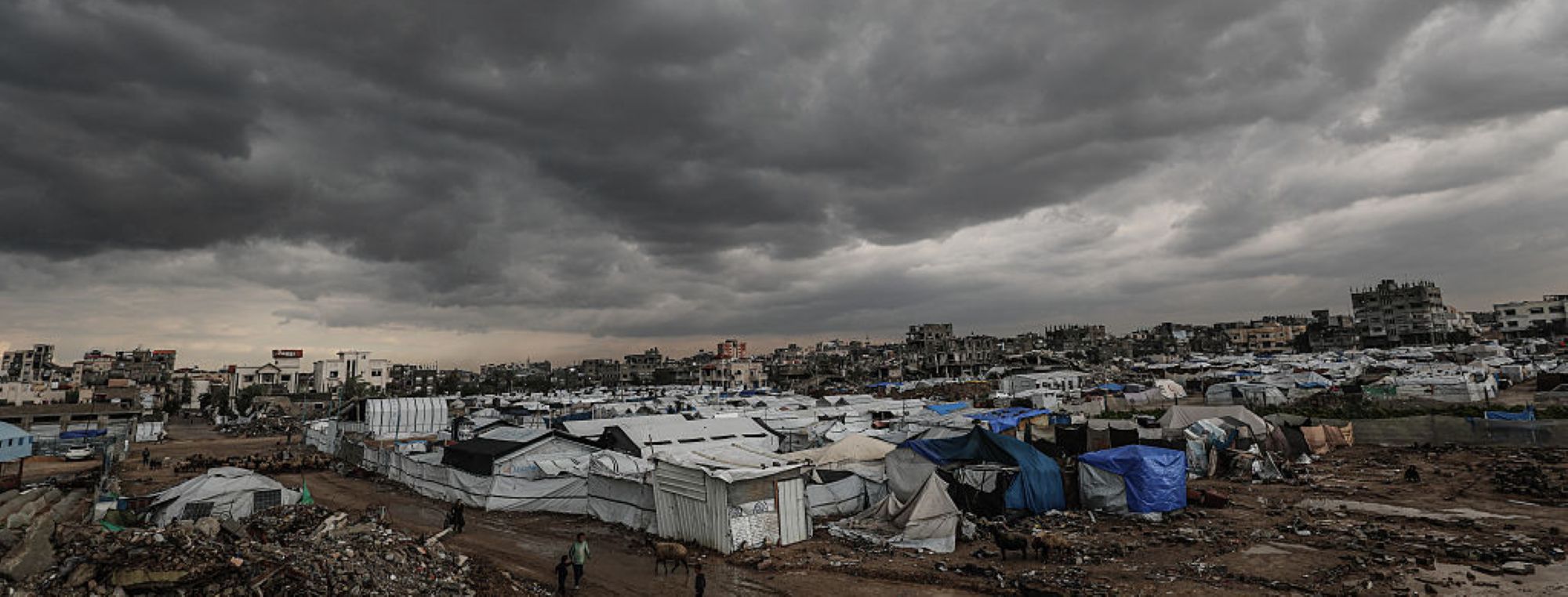
The devastation caused by torrential rain in the occupied Gaza Strip that led to the recent flooding of thousands of tents and makeshift shelters and caused buildings to collapse was fueled by Israel’s ongoing restrictions on the entry of critical supplies to repair vital infrastructure, said Amnesty International today.
Over two months after the ceasefire, and despite multiple binding orders from the International Court of Justice and its October 2025 advisory opinion on the obligations of Israel as an occupying power to ensure access to essential supplies and facilitate the work of UNRWA and other UN agencies, and the recent UN General Assembly resolution reaffirming that advisory opinion and calling on Israel to comply with its legal obligations regarding humanitarian assistance in Gaza, Israel has only allowed extremely limited supplies to reach a population that lacks almost everything and is living in extreme deprivation and amidst complete destruction. This is further indication that Israeli authorities are continuing to deliberately inflict on Palestinians in Gaza conditions of life calculated to bring about their physical destruction, an act prohibited under the Genocide Convention.
“The writing was on the wall; this was no accident, it was an utterly preventable tragedy. The devastating scenes of flooded tents and collapsed buildings in Gaza that have emerged in recent days cannot be blamed solely on ‘bad weather’. They are the foreseeable consequences of Israel’s ongoing genocide and deliberate policy of blocking the entry of shelter and repair materials for the displaced,” said Erika Guevara Rosas, Amnesty International’s Senior Director for Research, Advocacy, Policy and Campaigns.
“The deadly storms in recent days have inflicted further misery on an already traumatized population and compounded the suffering of Palestinians still reeling from two years of relentless bombardment and forced displacement. The knowledge that the extent of this disaster could have been prevented had Israeli authorities allowed the entry of shelter and other materials essential for repairing life-sustaining infrastructure is deeply distressing. Israel must immediately lift its cruel blockade on Gaza and ensure unfettered access for essential goods, repair materials and humanitarian supplies.”
After multiple displacements, destruction of or damage to at least 81% of structures and designation of nearly 58% of Gaza’s total area as no-go zones, the overwhelming majority of Palestinians are now living in dilapidated tents or damaged shelters with overflowing sewage and flood waters, exposed to the cold and heavy winds, with no adequate medical care or necessary materials to endure the winter.
Amnesty International visited three sites of three damaged buildings that collapsed following the last week’s storms in in Bir al-Naaja, Jabalia refugee camp; Al-Rimal, Gaza City; and Sheikh Radwan, Gaza City and spoke to family members whose loved ones died as a result of collapsing buildings. A total of nine people were crushed to death when the three buildings collapsed on 12 December. According to the Ministry of Health in Gaza, a 10th victim had also died a day earlier from a collapsed building in al-Shati refugee camp. The organization also spoke to seven displaced people living in makeshift camps across Gaza City, bracing themselves for another week of storms and flooding.
Obstruction of critical aid and essential supplies
According to an emergency snapshot published by a coalition of humanitarian organizations operating in Gaza, nearly US$50 million worth of aid and other vital supplies have been blocked from entering Gaza since the ceasefire, and at least 124 requests by NGOs to bring in aid to Gaza have been rejected.
According to UNRWA, Israeli authorities continue to prevent the agency from bringing in shelter and other essential supplies for displaced people in Gaza. On 9 December, UNRWA reported that it has enough food parcels for 1.1 million people and shelter supplies for up to 1.3 million people outside Gaza waiting to enter, which the Israeli authorities are refusing to allow in, in blatant violation of its obligations under international law. The need for such supplies has drastically increased following the recent floods and the beginning of the rainy season.
Last month Amnesty International highlighted how despite limited improvements since the ceasefire, Israeli authorities are still committing genocide against Palestinians in Gaza by continuing to deliberately inflict conditions of life calculated to bring about their physical destruction. It documented how Israeli authorities continue to prohibit the entry of materials necessary to repair life-sustaining infrastructure including equipment essential for sewage treatment, the maintenance and repair of water and sanitation infrastructure and warned of fears of a sewage overflow catastrophe in winter.
Israel’s persistent failure to lift restrictions on critical aid supplies and to comply with binding provisional orders by the International Court of Justice on providing unfettered access for humanitarian assistance, or its advisory opinion on the obligation to facilitate the work of the UN throughout the OPT, is further indication that Israel’s genocidal intent in Gaza has not changed.
A foreseeable and preventable disaster
A 46-year-old father of four, described how the tent he and his family lived in Tal al-Hawa, Gaza City was completely flooded last week:
“Since we learned about the upcoming storm, I tried everything I could to protect my children from its impact, including my 12-year-old child who has a disability; I tried to fortify my tent, with nylon, with additional wooden columns, but it totally flooded… We have no home to return to; some generous people donated a tent for us, but this week there is another storm and I don’t know what to do. I feel total despair. To see your children shiver in the cold, and not to be able to do anything for them is the worst thing for a father; I feel completely helpless.”
Restrictions on humanitarian aid entry have also driven severe shortages of shelter supplies, allowing a limited number of merchants vetted by Israel who are allowed to bring in goods, to exploit the crisis by inflating prices of essential commodities, including food and tents.
Amnesty International spoke to Mohammed Nassar, whose two children Lina, 18, and Ghazi, 15, died when their severely damaged home in Sheikh Radwan collapsed on 12 December following the storms. He described how the family had fled to southern Gaza twice to escape Israel’s bombardment and to keep their children safe, but had returned to Sheikh Radwan after the ceasefire. They were living on the ground floor of a damaged building.
“We thought having a solid roof above means protection, means privacy and dignity, especially as we had been living in tents … I thought I was more fortunate than the rest. To prepare for the storm, I tried putting covers as the windows were broken, doing some repairs,” he said.
He described how after going out in search of food in Al-Jalaa street he returned home and found his wife screaming as their five-storey building had completely collapsed. Their two children, Lina, 18, and Ghazi, 15, were in the same room when the upper floors of the home collapsed on them.
“Their mother was screaming for help to save them from the rubble, but by the time we got them out their bodies were completely crushed. Lina just recently passed her Tawjihi (high school matriculation) exams; Ghazi was hoping to go back to school again, but their dreams were crushed. I sent my remaining three children to their grandparents’ home as I look for a new place for shelter. I still cannot digest the thought that we survived the bombardment only for my children to be crushed as a result of the storm,” he said.
Shadi Hannouna’s two brothers, Khalil, 24, and Khader, 18, died when a house collapsed on their tent in al-Rimal in Gaza City on the dawn of 12 December. His family had set up three tents on a plot of land where their destroyed house once stood; one for himself, his wife and children, one for his two brothers and one for his parents.
“Because we knew about the upcoming storm, we tried to secure the tents as much as possible but how can you secure a tent? Our main fear was of flooding and drowning, especially for my parents who are old and who cannot bear this cold,” he said.
“At about 5am on Friday, a nearby house, already damaged, collapsed on [my brothers’] tent… the worst thing for us is we don’t know where to go next; there is no future for us; no horizon… the winter is only starting, and we have lost my two brothers like that.”
“The devastation and deaths caused by the storm in Gaza provide yet another wakeup call to the international community, paid for with the lives of people who had managed to survive two years of Israel’s ongoing genocide. Governments worldwide must urgently enable Gaza to prepare for the severe winter conditions by pressing Israel to end the blockade on Gaza and lift all restrictions on the entry of life-saving supplies, including shelter materials, nutritious food and medical aid,” said Erika Guevara Rosas.