






Former Hong Kong prison inmates have told of inhumane and degrading conditions in new research published today by Amnesty International, as the organization called for authorities to urgently investigate the situation in the city’s correctional facilities.
Nine former inmates jailed between 2016 and 2023 reported physical violence, prolonged solitary confinement, poor sanitary conditions and dangerously high summer temperatures during their incarceration across 11 prisons in the territory.
“These accounts of Hong Kong prison life by former inmates reveal a pattern of ill-treatment that has caused significant mental and physical harm and demands immediate investigation,” Amnesty International’s Deputy Regional Director Sarah Brooks said.
“Subjecting inmates to extreme heat, filthy conditions and violent punishment amounts to cruel, inhuman or degrading treatment, and may amount to torture under international law. Hong Kong’s government must end this culture of abuse and ensure those responsible for human rights abuses in its prisons are held accountable.”
Hong Kong authorities responded to Amnesty to refute the claims as a “malicious smear”.
“I heard screaming and the sounds of a ‘chicken wing’”
Tony Chung, a political activist held on remand at the Pik Uk Correctional Institution for juvenile offers from October 2020 to April 2022, told Amnesty International that violence by prison officers against inmates was commonplace.
“Sometimes, when officers were unhappy with an inmate, they would bring the inmate to a corridor where there was no CCTV coverage, and then I could hear the inmate screaming and the sounds of a ‘chicken wing’,” he said. ‘Chicken wing’ is a term used to describe officers striking an inmate’s shoulder blades with their elbows, a method intended to avoid leaving visible bruises.
Peter*, who was held in the same facility from 2016 over protest-related offences, said he was assaulted by a correctional officer on his first day because he did not know how to address staff properly.
“In juvenile prisons, inmates must use specific phrases to report their names and hold their ID cards in front of their chests,” he said. “I didn’t know that because I was new, so I was slapped in the face eight times as punishment.”
Peter said corporal punishment was used by officers to assert authority and to instil fear in juvenile facility.
“You could get beaten if your blanket wasn’t folded neatly or if your hands weren’t firm and straight enough while standing,” he said. “Once, I was asked to memorize the prison rulebook, then suddenly ordered to recite it backwards. For every wrong word, I was hit once on the soles of my feet. In the end, my soles turned purple.”
The inmates’ accounts appear to corroborate previous allegations of violence by Correctional Services Department (CSD) officers. In 2017, a Hong Kong media outlet interviewed 50 former juvenile inmates who described extreme physical and psychological abuse by CSD officers, including beatings and being forced to drink urine and eat faeces. In 2020, dozens of juvenile inmates were reportedly slapped by an officer after singing a protest song.
‘We had to be completely naked in the cells’
Hong Kong’s summers are extremely hot and humid with afternoon temperatures often exceeding 31°C. Pro-democracy online radio host “Giggs” Edmund Wan was remanded in 2021 in Stanley Prison for approximately 20 months, including two summers. He told Amnesty International that the cell was “like an oven” in the summer months and felt like it was “over 40°C”.
“Every night before we returned to our cells, we queued at the canteen toilet to use the hose there to pour water over our bodies to cool down,” he said. “But really, we were only fooling ourselves. By the time we walked from the canteen back to the cells, we were already drenched in sweat again.”
Although an electric fan was installed on the ceiling of each cell in Stanley Prison, Wan said it was tightly enclosed by a wire mesh that blocked airflow, rendering it “completely useless”.
“We had to be completely naked in the cells — not even underwear. I could hear people crying out in pain, and some had to be hospitalized because of the heat,” Wan said.
Amy*, who was held in solitary confinement at Lo Wu Correctional Institution during the summer of 2023, said her cell had no windows and she developed a heat rash. “Even the officers were completely drenched in sweat,” she added.
In 2024, imprisoned activist Chow Hang-tung mounted a legal challenge to the rules that require women – but not men – to wear long trousers year-round in prisons despite extreme heat in summer.
‘Where you could barely see the sun’
Hong Kong’s Prison Rules provide for two types of solitary confinement, both in violation of international standards. Rule 63 allows for punitive solitary confinement of up to 28 days for disciplinary offences. Rule 68B authorizes administrative solitary confinement initially for 72 hours and for a further period of up to one month for vague non-punitive purposes.
During his time in Pik Uk, Chung said he was put in solitary confinement under Rule 63 on at least three occasions, which he believed were acts of retaliation rather than legitimate disciplinary measures.
“Once, I told a friend during a visit that I had to do drill exercises for more than three hours because the officers thought we were too noisy at night. My friend posted this on social media, and a week later, officers searched my cell and ‘found’ a bookmark that didn’t belong to me. I was then sent to solitary confinement as punishment.”
Even the “non-punitive solitary confinement” appears to be, in practice, used as a punitive measure.
“When I first entered prison, officers put me into a room and pressured me to sign papers ‘voluntarily’ agreeing to solitary confinement,” Wan said. “There’s basically no way to refuse — they lock you in a room and keep you there until you agree to sign.”
Fernando Cheung, a former legislator held in Lai Chi Kok Reception Centre in 2022 and now an Amnesty International Hong Kong Overseas Board Member, said he was also required by officers to sign similar documents to “voluntarily” request solitary confinement.
Interviewees described the significant mental suffering caused by solitary confinement.
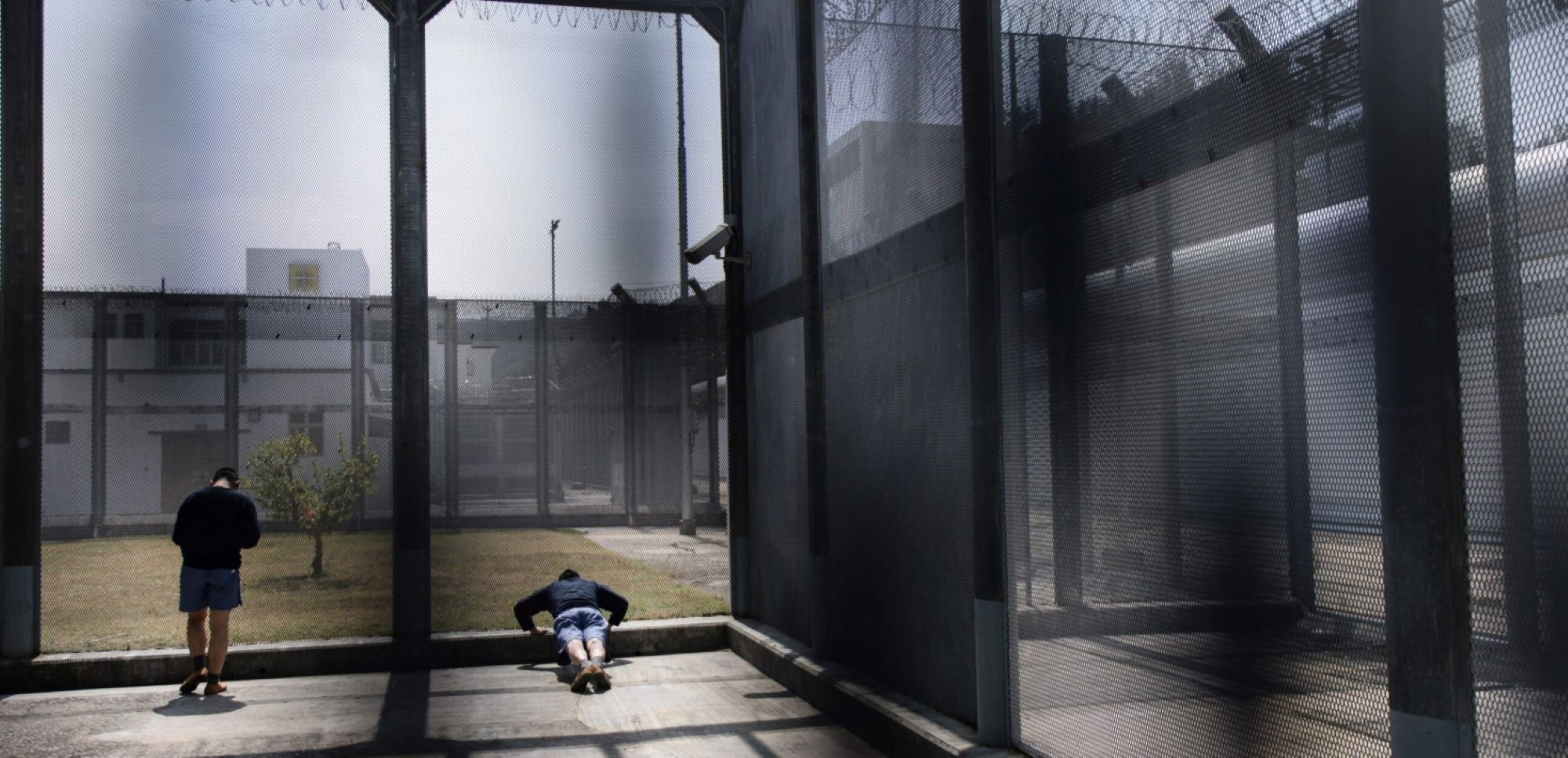
“I was locked in a tiny cell, completely alone for more than 22 hours a day,” Wan said. “I ate and used the toilet inside the cell. Although there was one hour of daily exercise, it was just walking alone inside a fenced cage where you could barely see the sun.”
Amendments of the Prison Rules in July 2025 included allowing the use of solitary confinement under Rule 68B based on the grounds of “safeguarding national security”.
Interviewees said solitary confinement was more likely to be used against prisoners detained for “political” offences.
‘Cockroaches were crawling on my body’
Interviewees also reported poor sanitary conditions inside prison. Tommy*, held at Lai Chi Kok in 2021, said: “There were cockroaches crawling on my body — I couldn’t sleep at all.”
Cheung, who was imprisoned in the same facility that year, described it as “extremely filthy — beyond imagination.
“In the cell, dust had built up into pillars hanging from the ceiling. In the prison hospital, the toilets couldn’t be flushed, and the stench was unbearable.”
Amnesty International calls on the Hong Kong authorities to take immediate and concrete steps to address the abuses it has documented, including by undertaking the necessary investigations and reforms to prevent further violations of inmates’ human rights.
The government should also implement recommendations made by the UN Committee against Torture in 2016, including:
- Establish an independent body with the mandate to carry out effective unannounced visits at all detention facilities.
- Reduce the maximum duration of solitary confinement and limit its use as a measure of last resort, for as short a time as possible. Clear and specific criteria should be established for decisions on solitary confinement, indicating the conduct, type and maximum duration.
- Compile and regularly publish comprehensive disaggregated data on the use of solitary confinement, including related suicide attempts and self-harm.
“Using solitary confinement as a tool of retaliation and coercion is an abuse of power that can spiral into psychological torture. The Hong Kong government must urgently bring its practices in line with international standards by strictly ensuring that solitary confinement is only imposed in exceptional, individualized circumstances and as a last resort, and subject to regular, substantive and independent review,” Sarah Brooks said.
Background
Hong Kong’s CSD currently maintains 29 correctional facilities across the city. Inmates in these facilities include people on remand awaiting trial or sentencing, convicted individuals serving sentences and people detained for immigration reasons. For simplicity, Amnesty International has used the term “prison” to refer any of the 29 facilities managed by the CSD.
In addition to interviews with former prisoners, Amnesty International also conducted extensive desk research and spoke with lawyers and researchers with expertise in the correctional service.
In response to Amnesty’s findings, the CSD said it “categorically refutes the allegations”. The CSD said it had zero tolerance of physical violence, that solitary confinement is only imposed “in strict adherence to the law”, that it enforced the “highest possible degree of cleanliness” and that it had taken “extensive measures” to address the effects of hot weather.