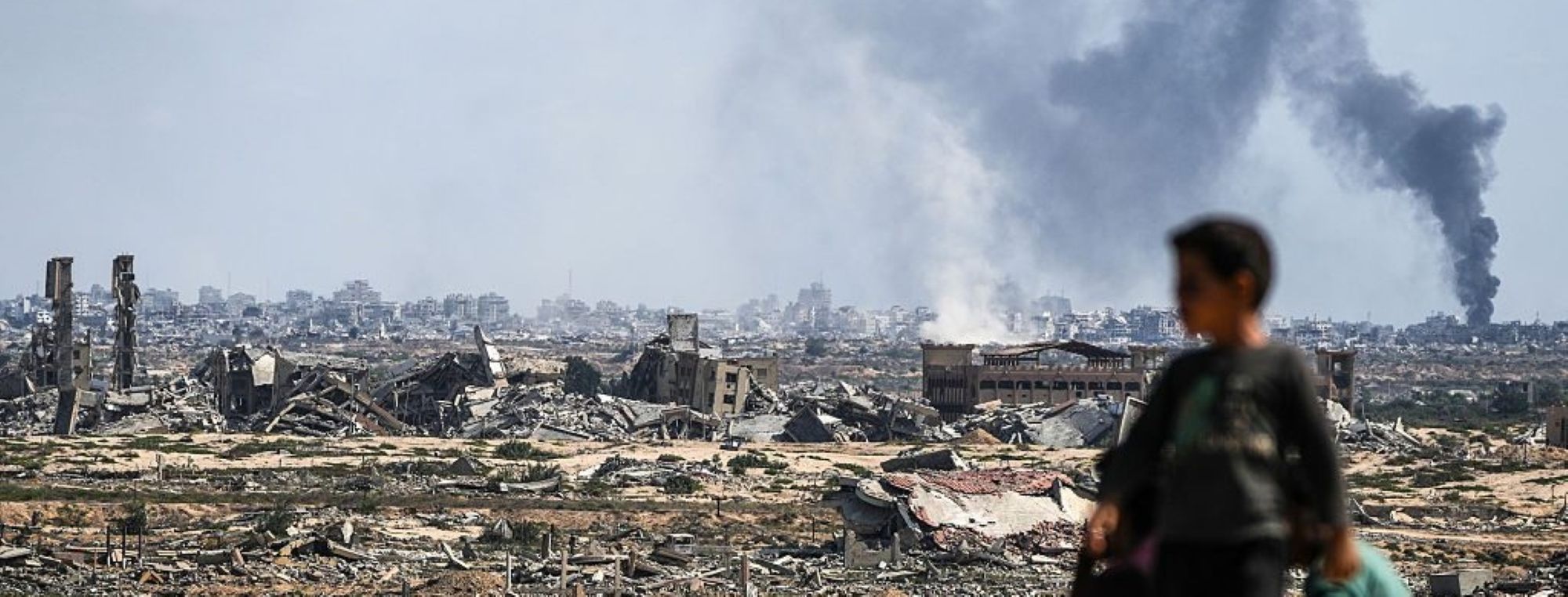










As people in Syria mark one year since the fall of former President Bashar al-Assad’s government, Amnesty International reiterates the urgent need for Syria’s new authorities to break with the past and commit to delivering justice, truth and reparations while securing human rights for all.
Over the past year, the decades of repression and systematic human rights violations that were committed under the Assad government have continued to deeply affect the country, with victims and survivors still waiting to see their rights to truth, justice and reparation realised. The new government, led by President Ahmad al-Sharaa and formed on 29 March 2025, has pledged to break with this legacy, and has taken some measures towards justice and accountability, but challenges remain.
In addition to crimes of the past, the new government’s response to serious violations committed since they came to power, including sectarian-based killings in the coastal and southern regions of Syria, will be a litmus test of its commitment to pursuing justice and accountability. Armed groups opposed to the government have also committed serious abuses including unlawful killings, abductions and burning of homes.
“During a recent trip to Syria, survivors, families of victims and local organizations spoke of their hunger for truth and justice for past and current human rights violations. The challenges are many, and the task monumental, but we saw the energy, effort and commitment of those who want to work together to build a new rights-respecting Syria, from the mothers and wives who came together to demand answers about their missing sons and husbands, to survivors of the recent massacres who documented what happened to their communities, to those leading civic efforts, to others who have joined the national commissions to deliver on truth, justice and reparation,” said Agnès Callamard, Amnesty International’s Secretary General.
“Syrian authorities must act decisively to build a rights-respecting future for Syrians who have suffered so much already. The government must strictly adhere to international human rights standards particularly on due process rights, including for suspects of past and current crimes. They must signal a zero-tolerance approach to any new violations to avoid spiralling back into old cycles of impunity for atrocities. They must enhance protection of the space for civil society to independently contribute towards this transition away from Assad-era violations.”
Justice for crimes of the past
One of the greatest tasks facing the new government is how to address Assad-era violations where hundreds of thousands of people in Syria were subjected to crimes against humanity and war crimes, including murder and other unlawful killings, arbitrary arrests, torture and other ill-treatment and enforced disappearance.
Between 2011 and 2024, more than 100,000 people in Syria are estimated to have been disappeared. The vast majority were forcibly disappeared by the Assad government, vanishing into its notorious network of detention facilities, but thousands of others were also abducted by armed opposition groups.
Over the past decade, survivors and families of victims have organized into associations, coalitions and organizations to call for the fate of their loved ones to be revealed, perpetrators to be held accountable, and reparations to be provided. In a 28 November public event at the Syrian National Museum organized by Amnesty International together with the Syrian Prisons Museum, families of the disappeared spoke of how they have not been able to fully mourn the loss of their loved ones without obtaining their right to truth and their right to justice. They also expressed their anguish at seeing former suspects of crimes roaming free, the lack of guidance regarding the legal status of the disappeared, delays in uncovering the truth about what happened to their loved ones, and the financial struggles they continued to face.
Since its establishment at the end of March, the new Syrian government has taken some key first steps towards truth, justice and reparation. In May, the President set up two national bodies by decree — the National Commission for Missing Persons (NCMP), which is tasked with the creation of a national database for the disappeared, identifying the fate of those disappeared, and providing support to families, and the National Commission for Transitional Justice (NCTJ), which is tasked with developing national strategies for truth-telling, criminal accountability, reparations, guarantees of non-recurrence, memorialization, reconciliation and peace building.
In November, the NCTJ confirmed to Amnesty International that the transitional justice law currently being drafted would ensure that the commission is able to address abuses committed by all parties to the conflict, including former Assad-led government and armed opposition groups. The commission added that the draft law would include international crimes not currently domesticated in Syria’s penal code and would be reviewed by a working group of 25 civil society organizations.
“Given the scale, gravity and widespread nature of past crimes, accountability processes will necessarily take time. To build and maintain trust, the commissions must ensure inclusive and transparent processes, undertake regular communication and consultation, provide equal access to victims from all sides of Syria’s brutal conflict, and recognize the crucial and complementary role of civil society organizations,” Agnès Callamard said.
“The international community has a critical role to play in supporting transitional justice and more broadly a Syrian future built on respect for human rights. A “Wait and See” attitude will do little to ensure that Syria’s transition actually delivers rights and safety to Syrian people. States must support truth, justice and reparation efforts, including by providing funding, and technical expertise and advocating for the meaningful participation of survivors, victims and civil society and for the transparency and independence of all mechanisms established to address past and current violations by all parties.”
Over the past year, the authorities have arrested a number of individuals suspected of responsibility for grave violations committed under the previous government. Five cases of high-ranking suspects have so far been referred to court. Minister of Justice, Mazhar al-Wais, told Amnesty International on 26 November 2025 that around 100 suspected perpetrators were currently in detention and that he foresaw further developments on the accountability front in the coming weeks, noting that the Ministry had begun receiving case files from the Ministry of Interior.
Justice and accountability for recent crimes
In addition to crimes committed in the past, the new government’s response to serious violations committed since they came to power, including the killings committed by government security forces and affiliated forces in the coastal region in March and in the southern province of Suwayda in July, will be a litmus test of its commitment to pursuing justice and accountability for all people in Syria.
Amnesty International documented the unlawful killings and extrajudicial execution of people from the Alawite minorityand members of the Druze community by government forces, government-backed forces and militia members. Druze armed groups and Bedouin tribal fighters also committed serious abuses in Suwayda governorate, including abductions, unlawful killings and the burning of homes.
In March, the president set up a fact-finding committee to investigate the killings in the coastal region. In July, the committee made public a summary of its findings, noting that it had identified a list of around 500 suspected perpetrators. However, to date, the committee’s findings and report have yet to be published in full.
On 18 November, public trial proceedings of 14 people accused of committing violations during the coastal massacres began. The Minister of Justice told Amnesty International that an additional 80 suspects identified in the fact-finding committee report were in custody pending trial.
While investigations, arrests of suspects and trial proceedings are a necessary step towards truth and justice, they are not sufficient on their own. It is crucial for the authorities to implement a vetting process to ensure that pending investigation, security forces and affiliated groups suspected of involvement in serious human rights abuses, do not remain, or are not placed, in positions where they could repeat such violations.
In response to the Suwayda killings, the Ministry of Justice established a committee to investigate the events. The Minister recently extended the work of the committee by three additional months and told Amnesty International that he expected the outcome and findings of the investigation to be made public.
“The authorities have taken a right step in acknowledging these atrocities. To rebuild trust between the authorities and minority communities and establish a rights-based order, they must also undertake human rights reforms, especially to the security sector, ensure that suspected perpetrators of crimes are removed from their positions and prosecuted in fair trials, that truth is established and made public, and that survivors and families receive effective reparation, including guarantees of non-repetition,” said Agnès Callamard.
“Proceedings must meet international fair-trial standards, including ensuring defendants’ access to lawyers and contact with their families, and thoroughly investigating any allegations of torture or other ill-treatment, and should exclude the death penalty.”
Civic space
One of the greatest achievements of the past year is the blossoming of civic space inside many parts of Syria, including areas controlled by the former government, with Syrian civil society groups organizing themselves into registered NGOs or informal associations.
However, civil society organizations reported that challenges remain, including the authorities requesting prior approvals to host public events, as well as the lack of clarity and consistency in the process for obtaining approvals, including across governorates.
To comply with international human rights law and standards on the rights to freedom of association and to peaceful assembly, authorities should avoid insisting on prior authorization for legitimate activities that associations conduct such as meetings, public events or assemblies.
In addition to state-led efforts, donors should be supporting the development of a robust and healthy ecosystem of independent initiatives by survivors, family associations, activists, advocates and civil society organizations working to document, report, or monitor, support victims and make demands.
“This nascent civic space must be safeguarded and authorities must ensure an enabling environment that allows civil society to flourish and grow. This includes eschewing burdensome approval requirements for peaceful gatherings that risk violating the right to freedom of peaceful assembly. Syrian civil society organizations are crucial actors for Syria’s successful transition, and they need to feel confident that they will be able to carry out their vital work safely and independently,” said Agnès Callamard.