










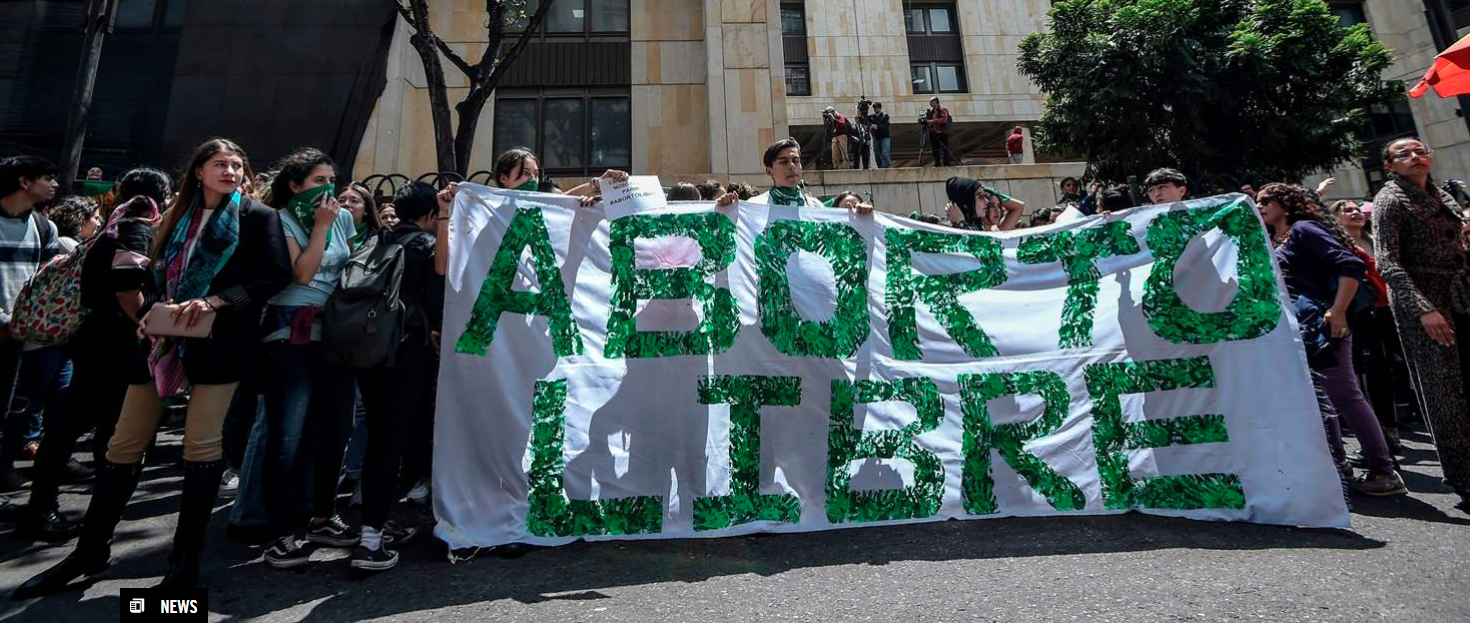
The decision by the Constitutional Court of Colombia not to take action to decriminalize abortion represents a missed opportunity for the realization of the sexual and reproductive rights of women and other people who can become pregnant in the country, said Amnesty International.
“By failing to take this historic opportunity to move towards the decriminalization of abortion in Colombia, the Constitutional Court has turned its back on women and their struggle to end the cycle of violence and the control mechanisms of which they have been the victims. Amnesty International regrets the Court’s decision to continue restricting women’s sexual and reproductive rights instead of setting a positive example for the region,” said Erika Guevara-Rosas, Americas Director at Amnesty International.
A 2006 ruling by the Constitutional Court (C-355/06) decriminalized abortion in cases where the pregnancy poses a threat to the health or life of the woman, when a serious malformation means that the foetus is not viable and when the pregnancy is the result of rape. This week, the Constitutional Court could have made a ruling in a case that would have represented a further step towards decriminalizing abortion, but it chose not to do so.
In many of its judgments the Constitutional Court has recognized that the right to abortion services forms part of the sexual and reproductive rights guaranteed in Article 12 of the Convention on the Elimination of All Forms of Discrimination against Women (CEDAW). Colombia is party to this treaty, which it signed in 1980 and ratified in 1982, and therefore has an obligation to comply with its provisions.
The Constitutional Court has also recognized that the voluntary termination of pregnancy is closely linked to women’s right to health, set out in Article 12 of the International Covenant on Economic, Social and Cultural Rights (ICESCR). Colombia is a party to this treaty, which it signed in 1966 and ratified in 1969, and therefore must not breach the obligations undertaken.
Amnesty International calls on Colombia to fulfil its human rights obligations, which have been reflected not only in Colombian jurisprudence but also at the constitutional level.
For more information or to arrange an interview, please contact Lucy Scholey, Media Relations, Amnesty International Canada (English branch), 613-744-7667, ext. 236, lscholey@amnesty.ca